

Optimizing Biotherapeutic Formulation and Deliverability
PHARMACEUTICAL VISCOSITY TESTING
Viscosity testing is critical to the development of high-concentration monoclonal antibodies (mAbs) and oligonucleotides. Overcome small sample volumes and high shear rate challenges with VROC® technology.
Why Viscosity Matters
High-concentration formulations are increasingly popular in biopharmaceutical development. These formulations often exhibit complex rheological behavior, such as shear thinning and aggregation. Viscosity measurement is essential across formulation, Quality Control (QC), and delivery design. High viscosity can cause high subcutaneous injection force, resulting in physical pain for the patient and poor compliance. In manufacturing, it impacts filtration (TFF) and yield.
In addition, pharmaceutical formulations often include extremely sensitive and expensive materials, like Oligos and mAbs, making low-volume testing crucial.

Precision Microfluidics with VROC® Technology
Traditional viscometers struggle with low-volume, high-viscosity samples, and often suffer from evaporation in open systems. Viscometer-on-a-Chip (VROC) technology integrates a microfluidic channel with a MEMS pressure sensor array. This closed system prevents sample degradation and evaporation—vital for sensitive Oligos—while allowing extremely precise shear-rate control and viscosity measurements from samples as small as 15 microliters.
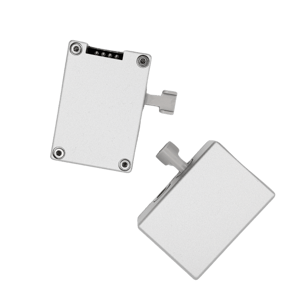
VROC® Viscometers for Biopharmaceutical R&D and QC
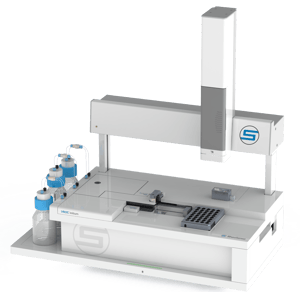
The premier automatic high-throughput viscometer. Runs up to 96 samples in 24 hours with as little as 19 µL per sample. Supports automated temperature sweeps and custom protocol design for self-driving labs.
Learn More ->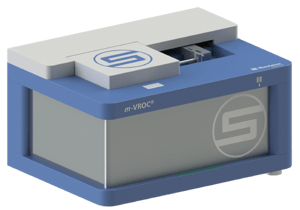
The industry standard for small-volume formulation testing. Measures viscosity with only 15 µL of sample, covering a wide shear rate range. Ideal for lipid nanoparticles (LNPs) and high-concentration mAbs.
Learn More ->