
Viscosity in Food & Beverage Industries
The impact of viscosity on mouthfeel
What Parameters Impact Electrospinning?
 Solution Viscosity
 Solvent Volatility
 Solution Conductivity
 Concentration & Molecular Weight
Viscosity testing helps with:

Stress evaluation across time, temperature, and shear, reflecting real processing, transport, and use conditions.

Taste is Impacted by Viscosity
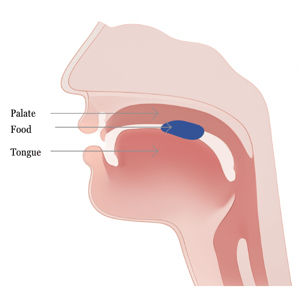
One of the first parts of taste is mouthfeel. The texture of your food can be impacted by the process of mastication, changing viscosity as chewing and swallowing progress.
This change of texture can be measured through extensional viscosity.
Find non-Newtonian Behavior
Many food products display non-Newtonian behaviors when pushed.
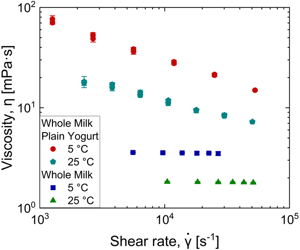
This graph shows the difference in viscosity between both milk and yogurt at different temperatures when measured at a variety of shear rates. You can see in the data that, while whole milk maintains Newtonian behavior, yogurt displays non-Newtonian behavior.
Fast Actionable Data
Accurate data provides actionable information for faster adjustments during R&D or for batch testing prior to manufacturing.
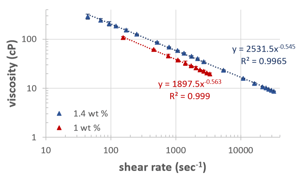
The graph to the right shows the change in viscosity of guar gum solution with increasing shear rates during a sweep.