
Rectangular Slit vs. Capillary Viscometers
This comparison helps prioritize the most important features to consider when selecting your new viscometer.




Specifications are based on general ranges and may vary by specific model.
Sample Volumes
Rectangular slit viscometers utilize microfluidic technology requiring minimal sample volumes (15-100 μL) while capillary viscometers employ gravity-driven flow through cylindrical tubes requiring larger sample volumes of at least 2 mL.
First Principal Measurements
1st principle measurements require strict control over shear rate. These measurements are based on the 1st principle of viscosity: Viscosity equals shear stress divided by shear rate. To use this principle, precise control over shear rate is critical.
Rectangular slit geometry viscometers provide first principle dynamic viscosity measurements by utilizing MEMS pressure sensors.
Capillary viscometers cannot control shear rate as they measure viscosity as a function of time utilizing gravity to move fluid through the capillary tube.
Learn More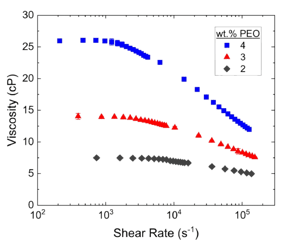
Repeatability
Accurate data is incredibly important in most industries. One of the best ways to confirm accuracy is to test multiple times. But what happens if your measurement method has low repeatability or varies depending on the user?
Capillary viscometers require multiple manual steps lowering repeatability and increasing opportunities for user error or variability.
Rectangular slit viscometers limit operator interaction with the sample to the preparation stage and reduce or eliminate user variability with automated and semi-automated models. Rectangular slit viscometers provide ±2% accuracy and
repeatability ±0.5% of reading.

INDUSTRY APPLICATIONS
Rectangular slit viscometers excel in biopharmaceutical protein therapeutic characterization, enabling high shear rate injectability testing with minimal sample consumption. They are also used widely in chemical and battery testing as the rectangular slit geometry creates a fully closed system.
Capillary viscometers remain standard for petroleum lubricant monitoring and kinematic viscosity determination of Newtonian fluids at low shear rates.