.png?width=200&height=58&name=RheoSense%20Logo%20(REGISTERED).png)


Thank You - Utilizing ASTM D341 Calculations for Predictive Viscosity Measurements
Application Note Download
Utilizing ASTM D341 Calculations for Predictive Viscosity Measurements
microVISC-m is built around the goal of facilitating faster and simpler oil-condition monitoring. By taking room-
temperature measurements, and comparing them to reference values at 40 oC, 100 oC, or anything in between, microVISC-m saves time and materials while also offering portability and flexibility. This application note describes microVISC-m’s specific calculation methods in extrapolating viscosity from room temperature values to target temperatures. The appendix includes data from tests of several different oils.
Underlying Formula:
microVISC-m relies on well-established calculation methods specified in ASTM D341, starting with this basic equation for kinematic viscosity:

Here, 𝑣 is kinematic viscosity at temperature T. The terms A and B are constants particular to each oil, with A characterizing the oil’s inherent viscosity, and B characterizing how the viscosity varies with temperature.
(This particular variant of the equation is applicable to viscosities of 2 cSt and above.)
Reference Profile:
When switched on, microVISC-m, asks the user to load or create an oil profile. This profile contains reference kinematic viscosity values at 40 oC and 100 oC. (The reference values can be either manufacturer-provided or
measured.) The profile also records oil density under measurement conditions, and the target temperature for comparison.
Calculating Target Reference Viscosity:
microVISC-m inserts the reference viscosity and temperature values into the basic Equation 1 above. Because there are two data points (𝑣1 at 40 oC and 𝑣2 at 100 oC), microVISC-m can use them to calculate the constants A and B, as follows:
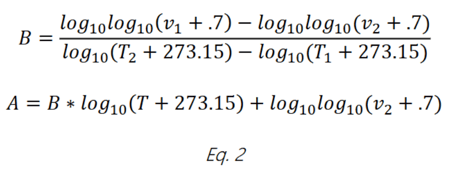
Once the constants A and B are calculated, microVISC-m inserts these into Equation 1, along with the target temperature, to calculate reference viscosity at that target temperature.
Measuring Ambient Viscosity:
microVISC-m next performs a dynamic viscosity (cP) measurement at room temperature. It then converts this value to kinematic viscosity according to this formula, using the provided density value:
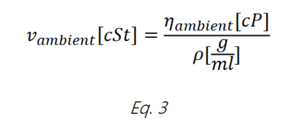
Calculating Target Kinematic Viscosity:
Assuming that temperature dependence of the kinematic viscosity of oil remains the same (B is the same), and that Equation 1 is applicable to the sampled oil, A value can be calculated from Eq. 1 and the calculated kinematic viscosity from the measured dynamic viscosity and density at ambient condition.

Now that we have both A and B, we can use Equation 1 to calculate kinematic viscosity at the target temperature, based on the room-temperature measurement.
Appendix – Test Data with Mobil 1 (0W30):
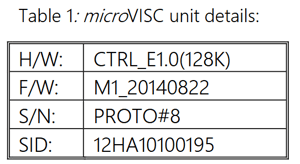
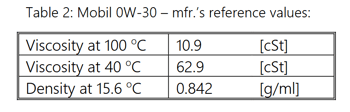
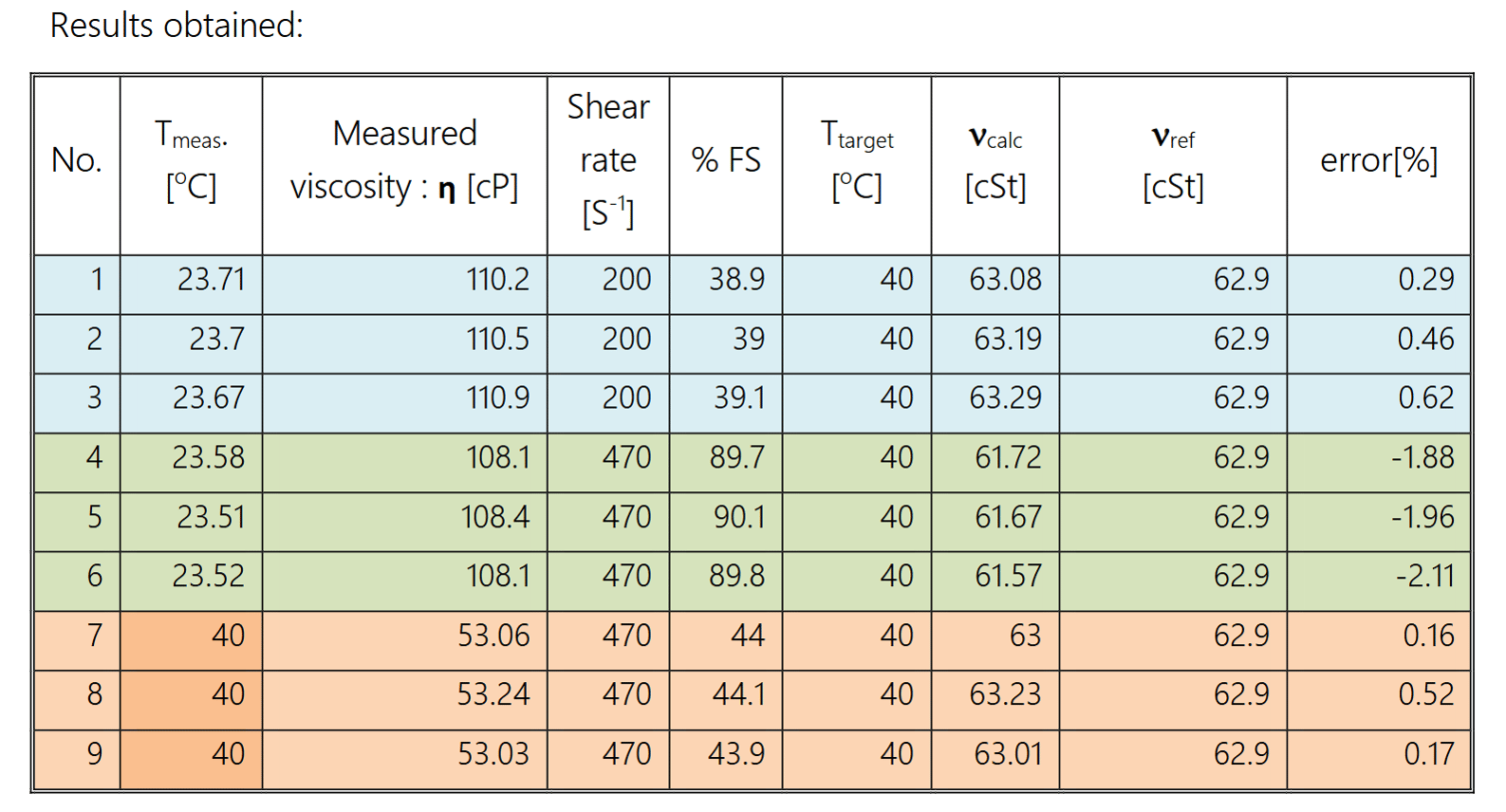
Below are results obtained when using microVISC-m in Table 1 to determine viscosity at target temperatures of 40°C and 100°C. We tested Mobil 0W-30 oil, using reference values provided by the manufacturer in Table 2.
In able 3, we used microVISC-m, together with a RheoSense microVISC-TC temperature controller, to test oil at 40°C as a baseline for accuracy.
If this note is helpful, please let us know! If you have questions or need more information about this product or other applications, please contact us:
Main Office — 1 925 866 3801
Sales – Sales@RheoSense.com
Information — info@RheoSense.com

.png?width=303&height=303&name=Temp%20Dependent%20Viscosity%20of%20Cannibis%20initium%20one%20plus%20App%20Note%20Tile%20(small).png)